
Central Dust Extraction System Cost in Saudi Arabia: What Drives the Price
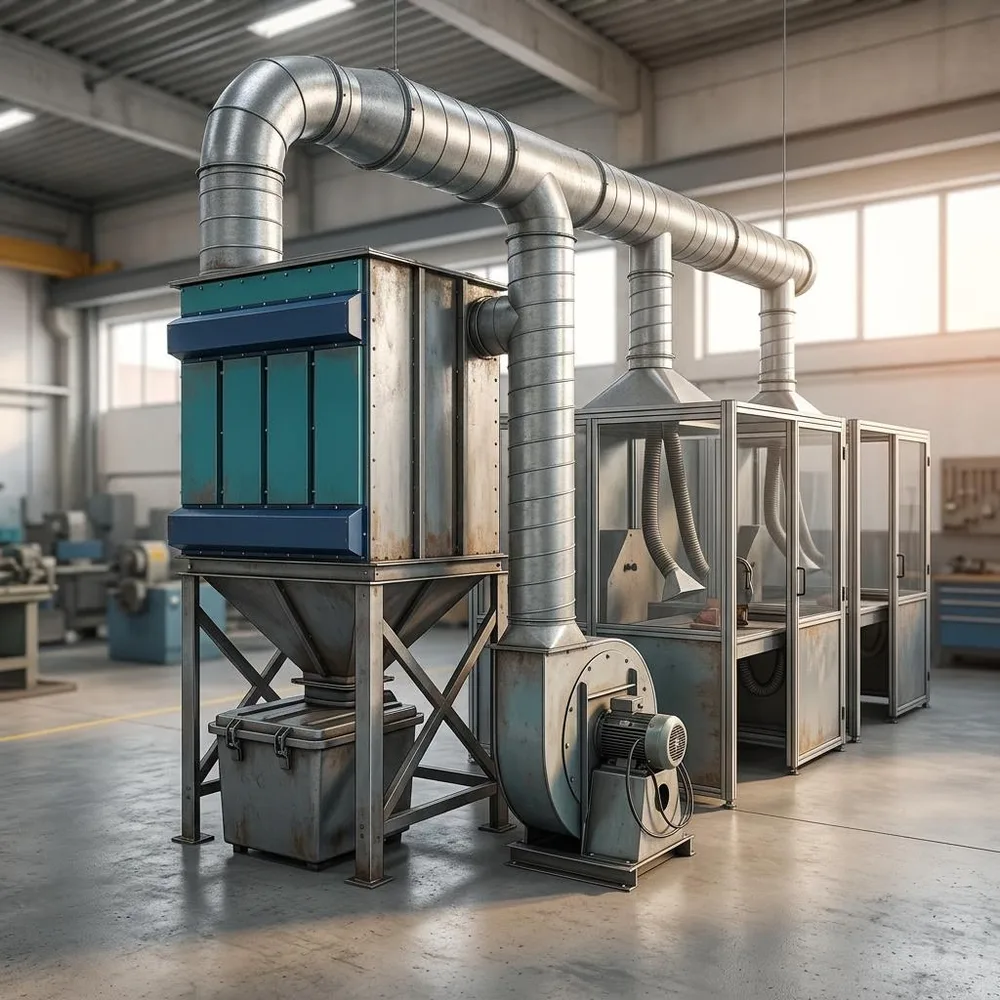
"How much does a central dust extraction system cost?" is one of the first questions facility teams in Saudi Arabia ask, and the honest answer is that the price is set by the process, not by the building. Two factories of identical floor area can need systems that differ several-fold in scope. This article explains the cost drivers so you can build a realistic budget and compare proposals fairly. It deliberately contains no DusTech prices: any figure published without your process data would be a guess.
1. Number and type of capture points
Every hood, downdraft table, booth or machine connection is a capture point with its own airflow requirement. More points usually mean more airflow, larger ductwork and a larger collector. The type of hood matters too: an enclosing booth often needs less air than an open hood placed further from the source. See why the capture hood matters before the fan.
2. Total design airflow and simultaneous use
The collector and fan are sized to the airflow of the points that run at the same time, not the sum of every point ever installed. A clear operating scenario can reduce the design airflow; an unclear one tends to inflate it. Network balancing is discussed in multiple extraction points.
3. The dust itself
Fine composite, metal, wood, food powder and mineral dusts behave differently. Abrasive dusts may require wear-resistant ductwork; sticky or fibrous dusts influence filter selection; conductive dusts change equipment requirements. Material testing, if needed, is part of the budget.
4. Combustible-dust protection
If a Dust Hazard Analysis identifies a combustible-dust hazard, explosion venting, flameless venting, isolation valves, spark detection or suppression may be specified. These protections can be a significant share of cost and must not be value-engineered out. The glossary explains Kst, Pmax, venting and isolation.
5. Ductwork length, routing and installation access
Long duct runs, many bends, high-level routing, roof penetrations and limited access add material and installation time. Working at height inside an operating plant, night shifts or shutdown windows also influence the price.
6. Filtration and air discharge
Cartridge or bag filters, filter class, the cleaning system and whether air is discharged outside or returned indoors all affect the collector specification. Recirculation requires additional assessment and safeguards; see can filtered air return indoors.
7. Controls, electrical and utilities
Variable-speed drives, automatic dampers, pressure monitoring, interlocks and compressed-air supply for filter cleaning add cost but can improve performance and energy use when properly engineered.
8. Waste handling
Drums, rotary valves, bagging stations and safe-emptying arrangements are frequently forgotten in early budgets and added later at higher cost.
9. Commissioning, documentation and training
Airflow measurements at each capture point, as-built drawings, operating instructions and operator training are part of a complete scope. A cheaper proposal that omits them often costs more over the life of the system.
How to get a reliable figure
The fastest route to a dependable budget is a site assessment and a written brief. Share your process list, materials, operating hours and any hazard data, and ask each bidder to price the same scope. DusTech provides central dust extraction system design, supply, installation and commissioning across Saudi Arabia; for portable alternatives see rent or buy portable extraction. To request a scoped proposal, use the RFQ form on our procurement page.