Multiple Extraction Points: Why Network Balance Matters
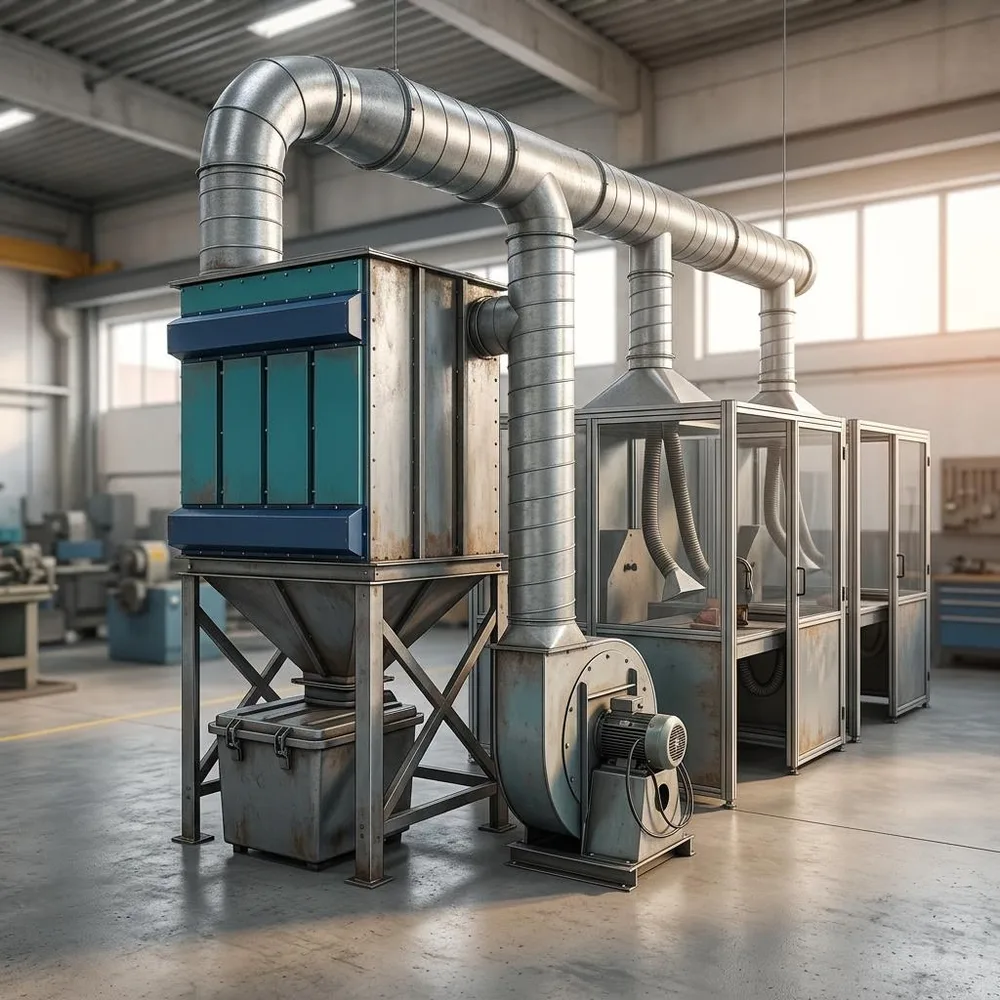
A central collector serves a network, not a set of independent hoses. Opening one branch or changing a hood can alter the airflow available to other points.
Define simultaneous demand
Identify which processes operate together and which are genuinely intermittent. Do not assume every station is always open—or that operators will reliably close unused points without a suitable operating arrangement. The system needs to work across the intended production scenarios.
Consider the whole pressure path
Each hood, bend, duct length and filter contributes resistance. Branches with different resistance will not necessarily receive the intended airflow without engineering and balancing. Simply increasing fan speed may create new problems, including excessive noise or energy use.
Preserve the commissioned settings
Document branch settings and measurements during commissioning. Changes to machines, duct routes or production patterns should trigger a review rather than an informal adjustment. Mark controls clearly and give operators a simple way to report weak capture. DusTech treats future expansion as a design input so that an apparently minor addition does not undermine the original installation.