
Central or Portable Dust Extraction: Where Should You Start?
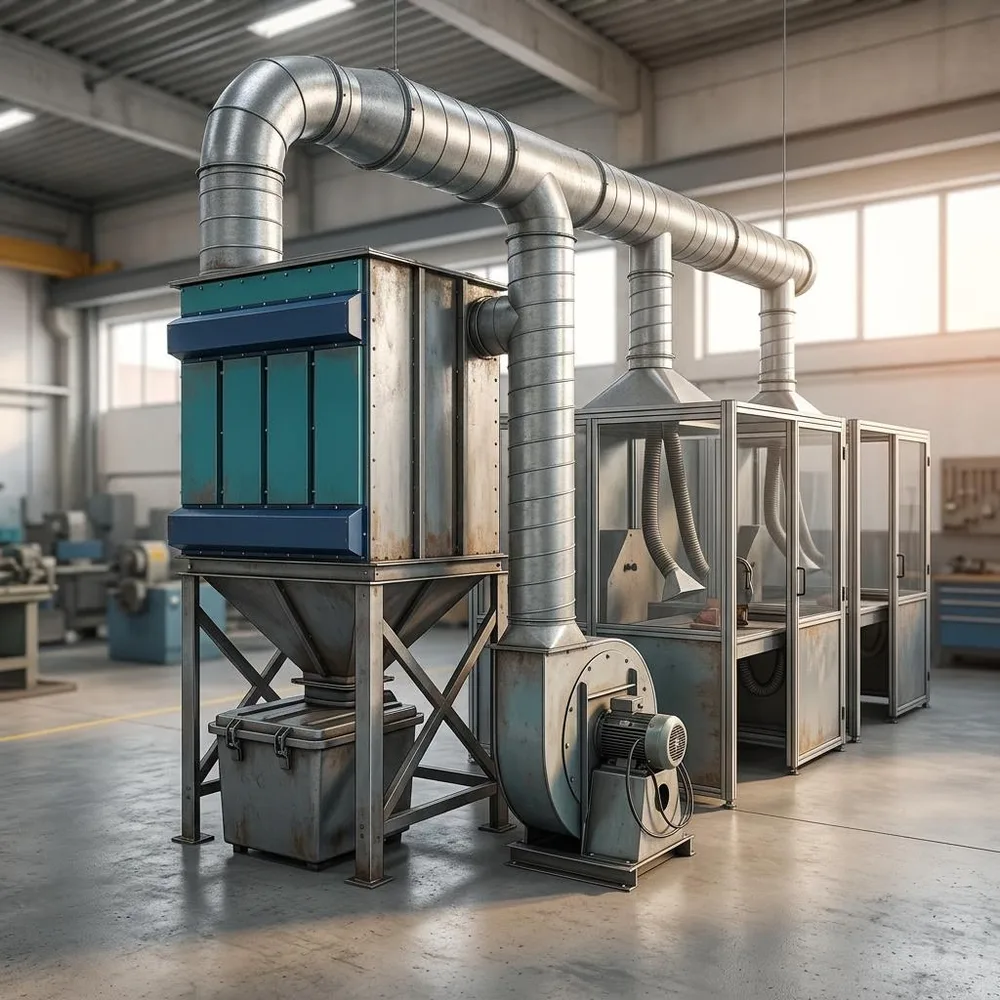
A central system is not automatically the best choice for a large factory, and a portable unit is not automatically enough for a small workshop. The deciding factors are where dust is generated, how often the process runs and what must be captured.
When central extraction fits
Permanent production stations with predictable duty cycles can benefit from engineered hoods and a duct network connected to a collector. The design must account for simultaneous operation, pressure losses and safe handling of the collected material. Adding branches later can change the performance of the entire network.
When portability helps
Portable extraction can suit changing work locations, intermittent tasks or an initial process trial. Its effectiveness still depends on the hood, hose, filter and fan working together at the actual operating point. A mobile industrial vacuum used for settled dust is not necessarily suitable for continuous airborne process capture.
Make the decision from evidence
List each source, material, operating duration and available utility. Include hazardous-area requirements and waste handling before comparing options. Some facilities need both architectures: central extraction for production and a suitable portable system for maintenance. DusTech can scope this combination through a site assessment rather than choosing equipment from floor area alone.