
Why the Capture Hood Matters Before the Fan
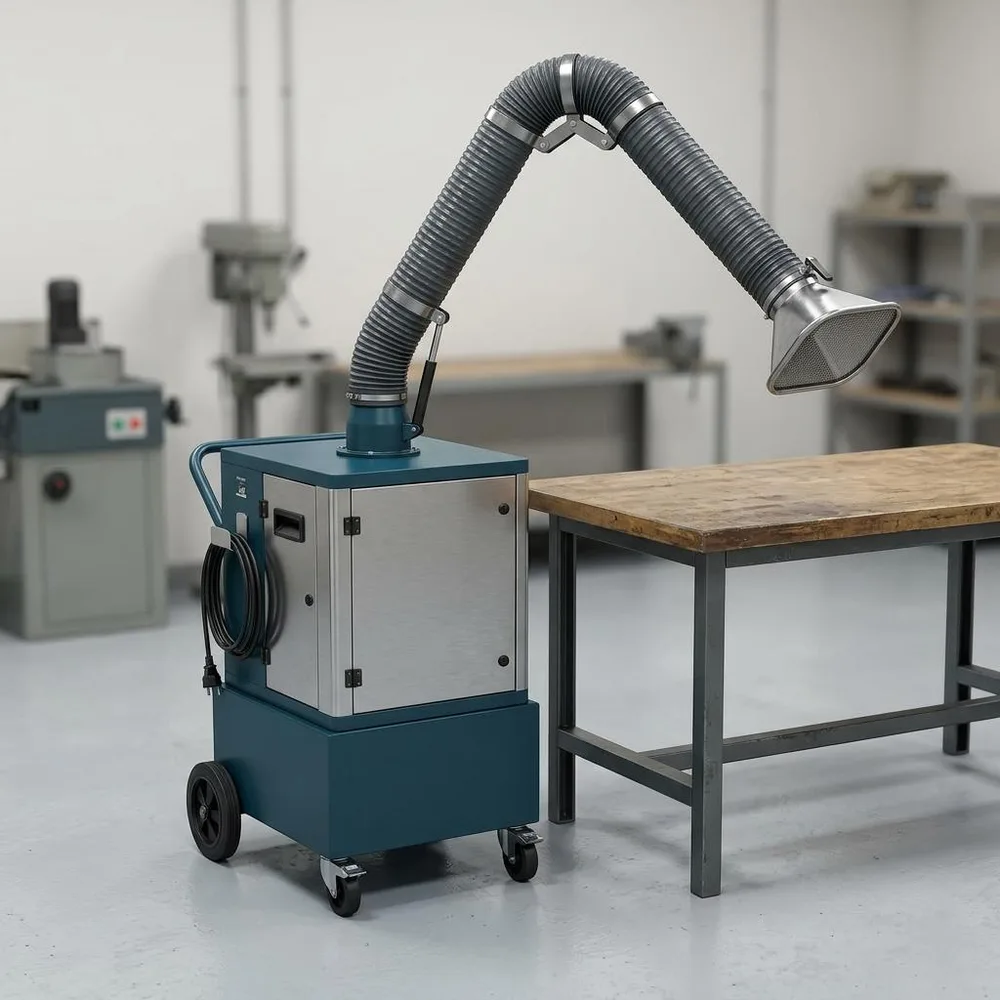
Extraction works best when it intercepts dust close to its source. Moving a hood farther away usually makes effective capture harder, even when the fan appears powerful on paper.
Follow the dust movement
Grinding, pouring and cutting release material in different directions. Positioning must consider that momentum, nearby air movement and where the operator stands. The intended path should carry contaminants away from the breathing zone, rather than drawing them past the operator toward the hood.
Make the hood usable
An enclosure can improve containment, but it must still allow the task to be performed safely. If access is awkward, operators may move or remove the hood. Discuss loading, visibility, tool changes and cleaning with the people who use the process before finalising the design.
Verify the complete arrangement
Capture needs to be assessed with the actual process running under representative conditions. Airflow readings help establish a baseline, but a number alone does not prove effective control. Avoid choosing an arbitrary airflow from a generic table without considering the task. DusTech’s extraction assessment considers the hood, ductwork, collector and operating method as one system.