
Grain Transfer Points: Reducing Dust Escape During Handling
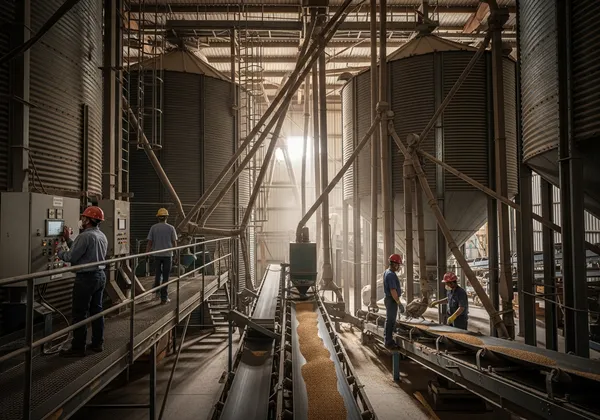
Grain handling creates releases at changes of direction, drops and open transfer points. The visible cloud is only part of the issue: deposited material can accumulate around equipment and on elevated structures.
Examine each transfer
Review receiving, conveying and discharge under representative loads. Enclosures should contain the release while allowing safe inspection and clearing. Extraction must be designed for the process rather than connected wherever a duct route is convenient.
Assess combustible-dust precautions
Grain dust can present a combustible-dust hazard. The actual material and installation require competent assessment, including appropriate equipment and protection measures. Housekeeping cannot substitute for addressing a recurring process release.
Watch for changing conditions
Different grain conditions, transfer rates or equipment wear may change dust generation. Keep inspection and cleaning records linked to production observations. Avoid methods that disperse deposits into the air, and manage access around moving machinery through site procedures. DusTech can help scope source capture and high-reach cleaning together so that transfers, surrounding equipment and elevated deposits are addressed as connected parts of the facility’s dust-control programme.