Conductive Metal Dust: Questions to Ask Before Choosing Equipment
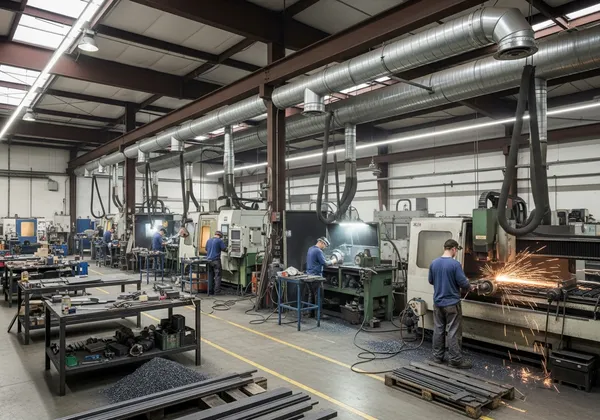
Metal-working dust should not be treated as one uniform material. The alloy, particle size, process and contamination can all influence the hazards.
Identify the actual material
Review the process and available material data with a competent specialist. Some metal dusts can be combustible, conductive or reactive. Mixing residues may introduce additional risks, and a wet collection method is not automatically suitable for every metal.
Check the permitted application
An ATEX marking is not a universal approval for any dust. Verify the relevant equipment category, dust group, temperature limits and operating instructions against the assessed environment and material. Conductive dust applications may require suitability for group IIIC; do not infer this from a generic claim of dust certification.
Review the complete collection chain
Hoses, tools, connections, filters and waste containers must be suitable for the specified arrangement. Define segregation and safe emptying before the equipment arrives. DusTech can help assemble the selection brief, but material hazards and area classification require competent assessment. Never use trial-and-error collection as a way to establish whether an unknown metal dust is safe.