
Reducing Extraction Energy Use Without Losing Capture
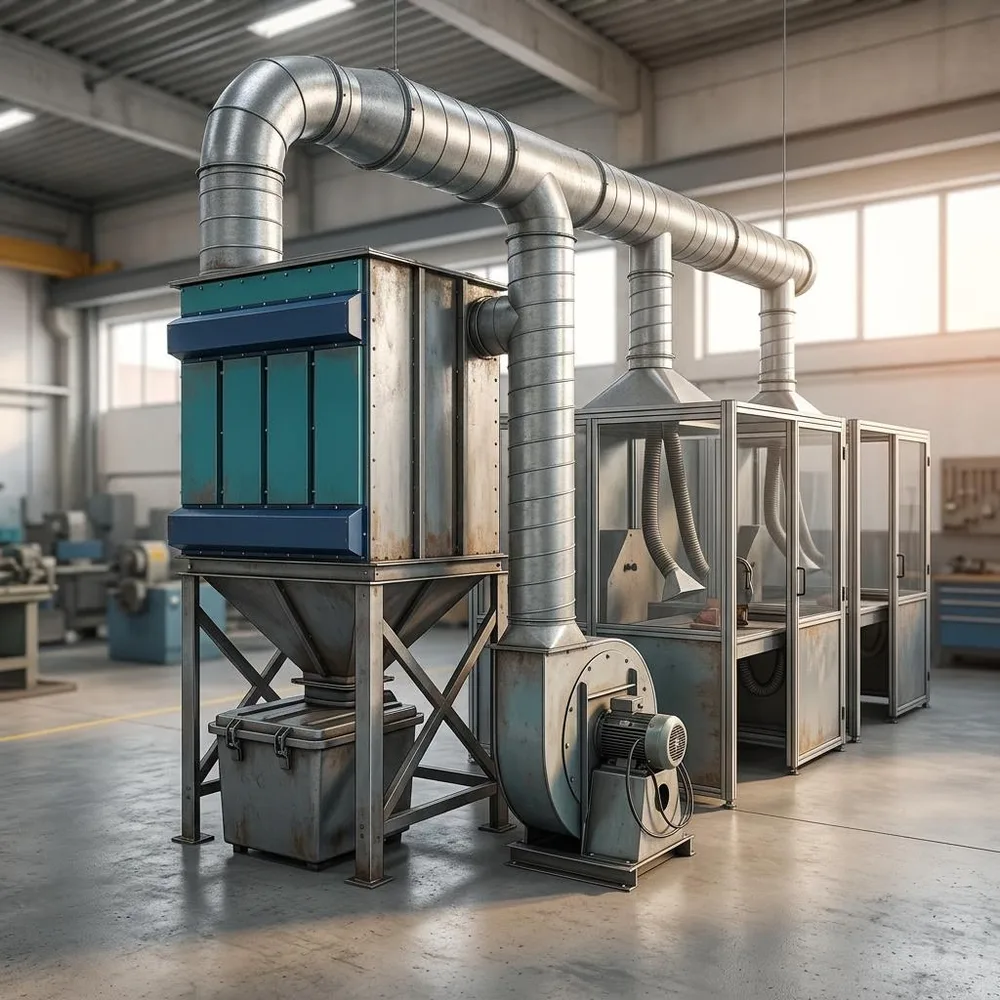
An extraction system must first control the process. Reducing fan speed without understanding the network can lower energy use while also leaving dust uncaptured or deposited in ductwork.
Remove avoidable losses
Check for blocked filters, damaged ducts, leaking connections and unnecessary restrictions. Review whether the system still matches the production layout. Poor performance should be investigated before it is compensated for with a higher fan setting.
Control demand carefully
Variable-speed control and managed branches can be useful in an appropriately engineered system. Their operating range must preserve adequate capture and material transport across the expected combinations of open points. Controls should not rely on informal operator habits that cannot be sustained.
Measure the outcome
Compare power use under equivalent production conditions and verify extraction performance after any change. Avoid promising a percentage saving without a measured baseline and a defined scope. Maintenance improvements, better hood design and revised operating schedules may offer opportunities, but each needs verification. DusTech can assess energy considerations alongside safety and production requirements rather than treating efficiency as a separate fan-speed exercise.