
Should Different Dusts Share One Collector?
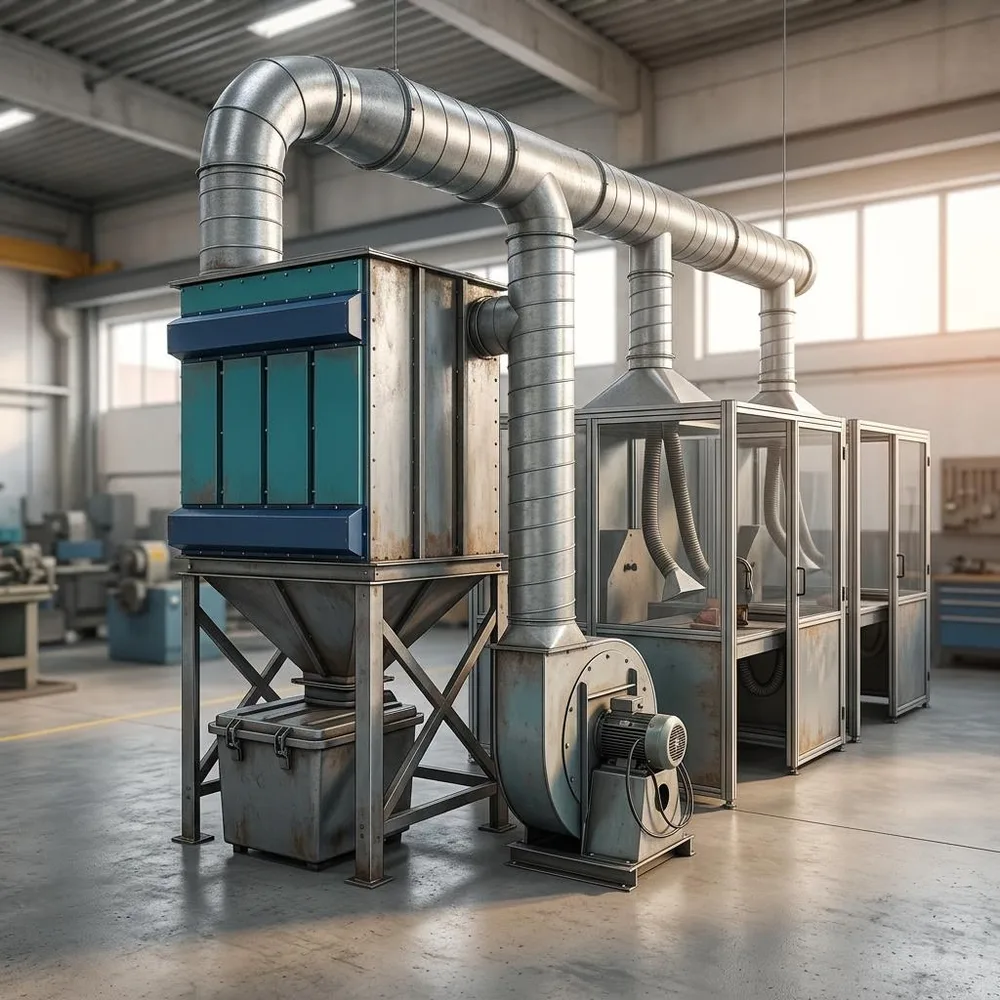
Connecting several processes to one collector may look economical on a layout drawing. It can also mix materials that should remain separate.
Identify what can meet inside
Consider raw materials, cleaning residues, hot particles and contaminants—not just the main product. Review chemical compatibility, combustibility and possible reactions with competent specialists. The collector and waste container become mixing points even if the production stations are physically distant.
Consider quality as well as safety
Food allergens, product-grade requirements and waste classifications can make segregation necessary even where a hazardous reaction is not expected. Changing the production recipe may invalidate an earlier assumption about compatibility.
Make segregation visible
Where separate systems or dedicated portable units are required, identify connections, tools and containers clearly. Training and cleaning procedures should support the physical separation. Do not rely on colour coding alone if incorrect connections remain easy to make. DusTech can map dust streams during the survey and include segregation requirements in the extraction brief. Combining sources should be an assessed design choice, not an improvised use of spare duct capacity.